Your Seller Agreed to Paint Before Listing. Here’s How I’d Choose the Color.
Getting a seller to agree to paint before listing can feel like a win in itself. But then comes the next question:
What color?
And this is usually when someone suggests a popular white they saw on Pinterest, asks for the “best white for resale,” or defaults to whatever neutral worked in the last house. The problem is, there isn't one white I would recommend for every home. A paint color that looks beautiful in one house can look completely different in another depending on the floors, countertops, cabinets, natural light, and even what's happening outside the windows.
So if your seller has agreed to spend the money to paint, I wouldn't start by asking, What's the most popular white right now? I'd start by looking at the house.
First: Does the House Actually Need Paint?
I don't automatically recommend painting every house before it hits the market. I'm usually looking at a few things: the condition of the walls, whether the colors feel dated, and whether there are too many different colors throughout the home.
When you're selling, you're no longer designing the house around one person's taste. You're trying to create a clean, neutral backdrop that will appeal to as many buyers as possible. That doesn't mean the house needs to be boring. It means we don't want buyers walking from a blue room into a beige room into a gray room into a room with a dark accent wall.
Aside from making the house feel less cohesive, you're also giving the buyer another project. Instead of noticing the hardwood floors or the size of the living room, they're mentally thinking: We're going to have to paint this entire house.
And painting an entire house isn't cheap.
On the other hand, if I walk into a home and the existing paint is neutral, cohesive, in good condition, and works with everything else, I'm not going to recommend spending thousands of dollars just because I personally would have chosen a different shade. The goal isn't to design the house for me.
The goal is to get it ready to sell.
For a Listing, I'd Usually Choose One Color
If we do decide to repaint, I'm generally going to recommend using one color throughout the house. Could we choose different colors for the office, dining room, bedrooms, and main living areas? Of course.
If I were designing the home for someone who planned to live there, I might do exactly that. But your seller is leaving. There's usually no reason to spend additional money, time, and energy creating a complicated paint palette for a house they're about to put on the market.
Using one color also creates continuity from room to room. It can make the home feel bigger, brighter, and much more cohesive. That's exactly what I want when buyers walk through the front door.
Yes, I Like White. But Not Just Any White.
I'm a big fan of using a shade of white when preparing a home for sale, particularly when I'm working with a house that doesn't get a lot of natural light. But “paint it white” isn't really enough information.
There are warm whites, cool whites, creamy whites, neutral whites, whites with yellow undertones, whites that can suddenly look green... And then there are whites that are so stark they make the house feel more like a doctor's office than a home.
I've also seen popular colors like Sherwin-Williams Alabaster pull much more yellow in certain spaces than someone expected. That doesn't make Alabaster a bad paint color. It just means a paint color isn't good or bad in isolation.
It has to be right for the house.
The First Thing I'm Looking At? The Floors.
Before choosing a white, one of the first things I'm looking at is the flooring, especially hardwood. The fixed finishes in a house aren't going away when we paint the walls, so the new paint needs to work with them rather than fight against them.
Let's say the house has warm, orange-toned hardwood floors. I'm probably not going to put a very cool white on the walls next to them. That contrast can make the two finishes feel disconnected rather than making the flooring look better. I'd look for a white with undertones that work with the warmth already in the floors.
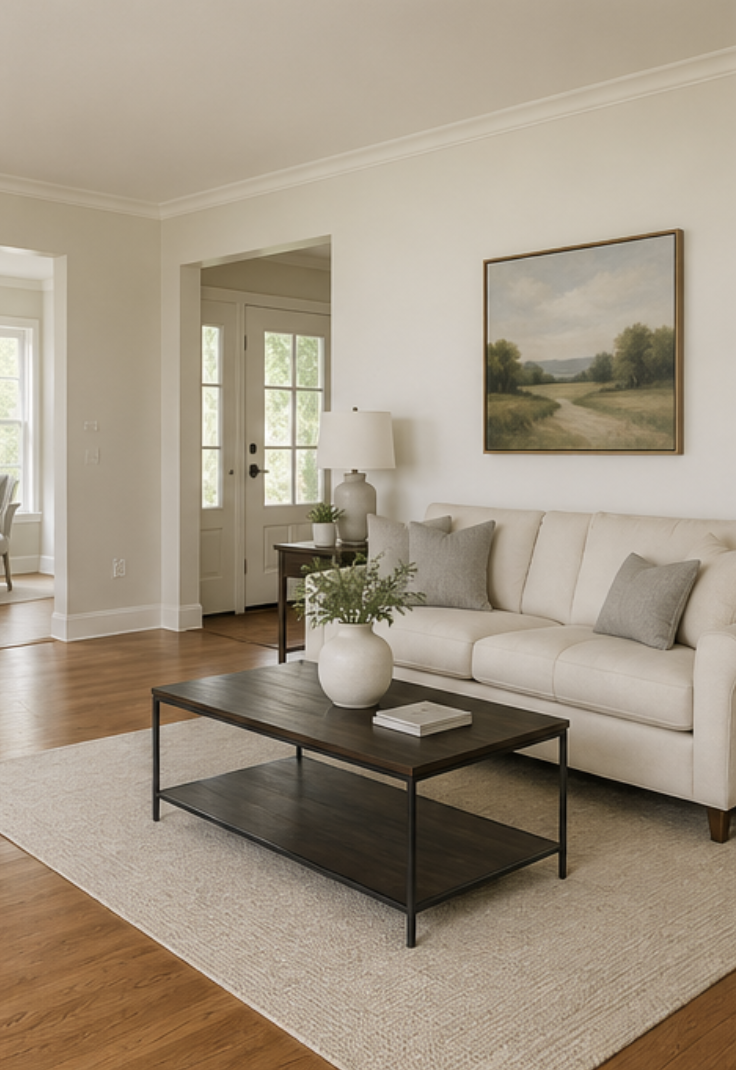
These hardwoods have a lot of warmth in them so I'd avoid pairing them with stark, cool white. I’d look for a white with enough warmth to connect the walls to the flooring without making the entire room feel yellow.
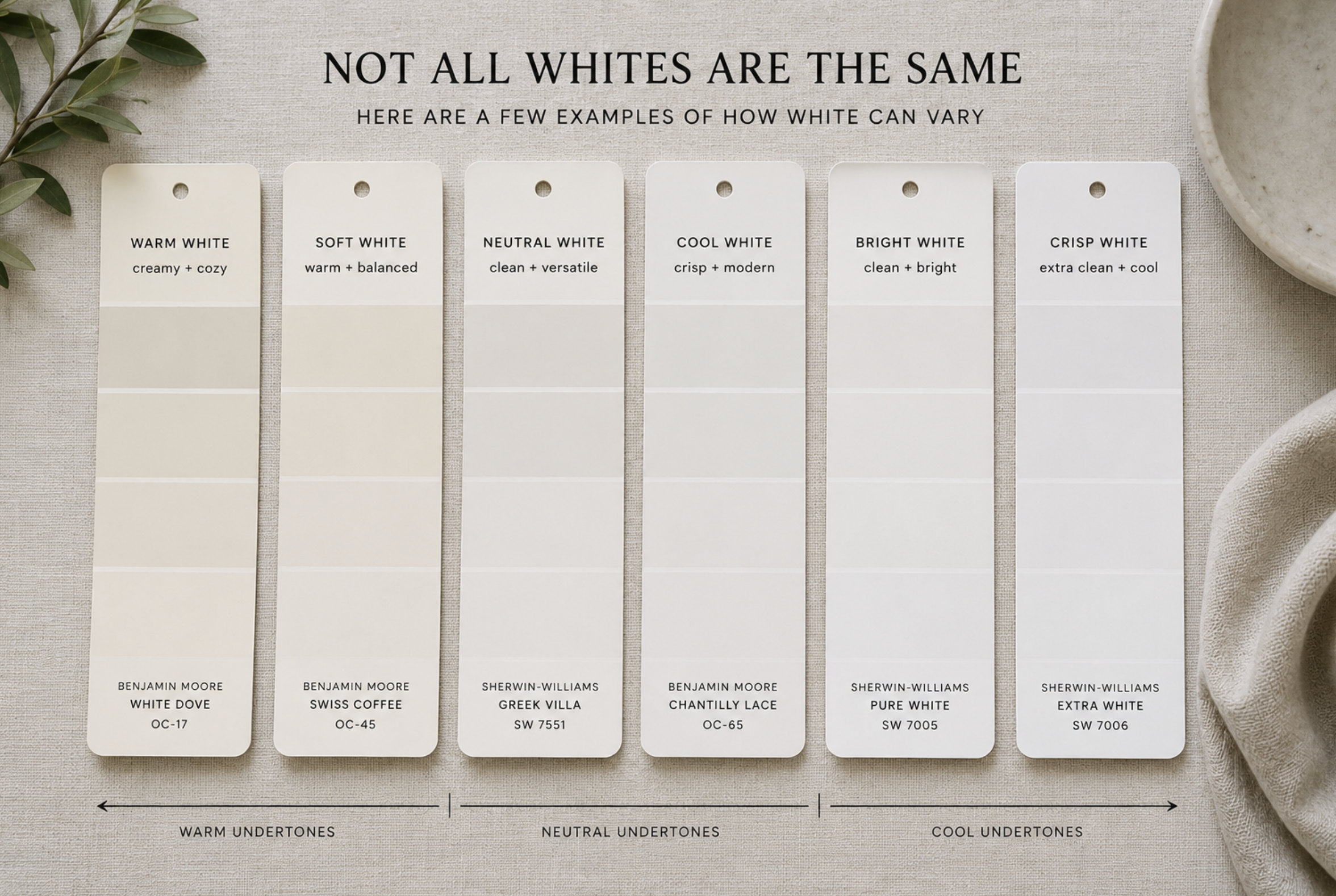
Examples: Benjamin Moore White Dove (OC-17), Benjamin Moore Swiss Coffee (OC-45), Sherwin-Williams Greek Villa (SW 7551), Sherwin-Williams Shoji White (SW 7042), and Sherwin-Williams Natural Choice (SW 7011)
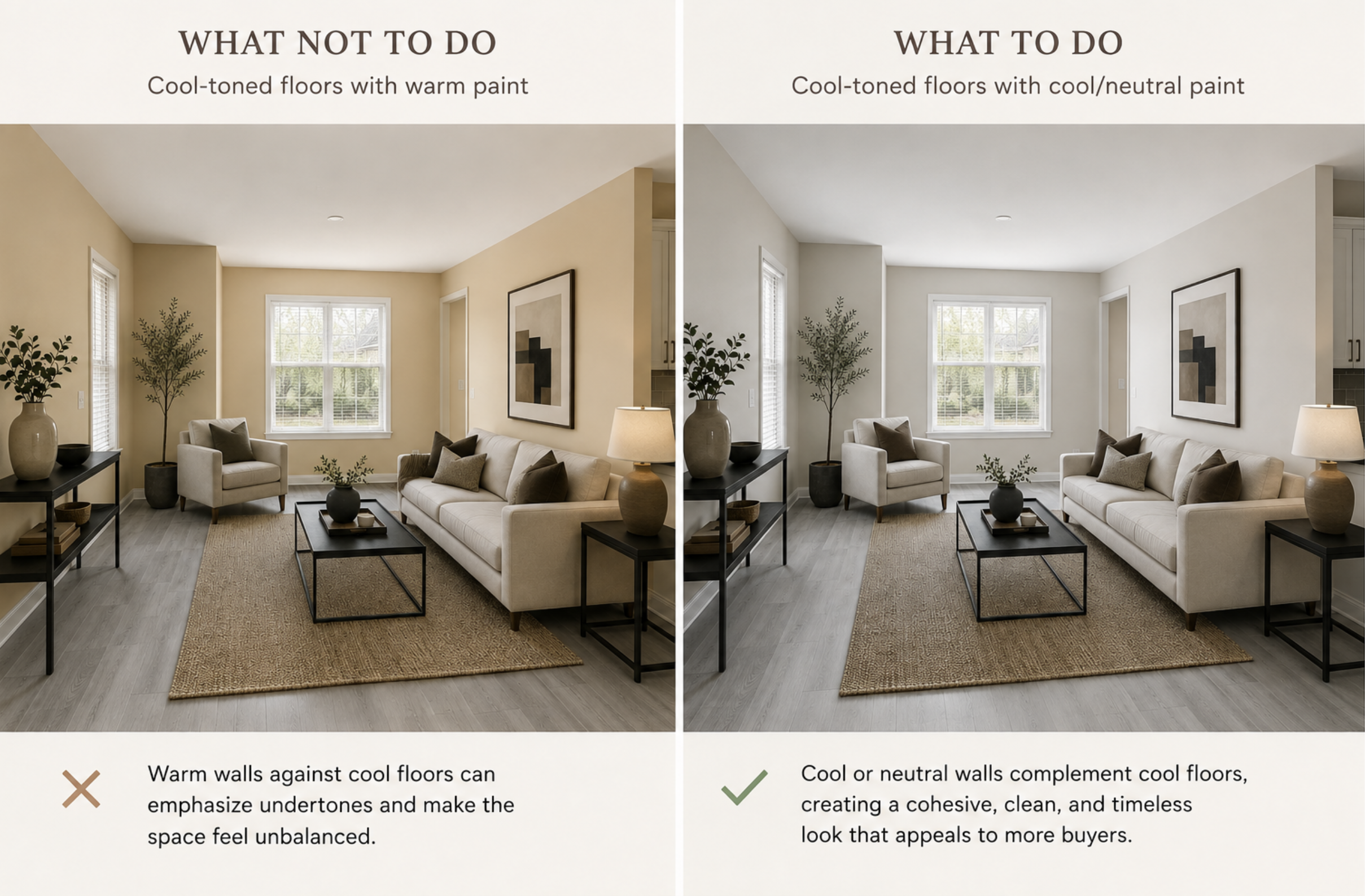
On the flip side, if the house has very cool gray flooring or tile like the photo below, I'm going to look at a different family of whites. A very creamy, yellow white next to cool gray flooring can make both finishes look more extreme.
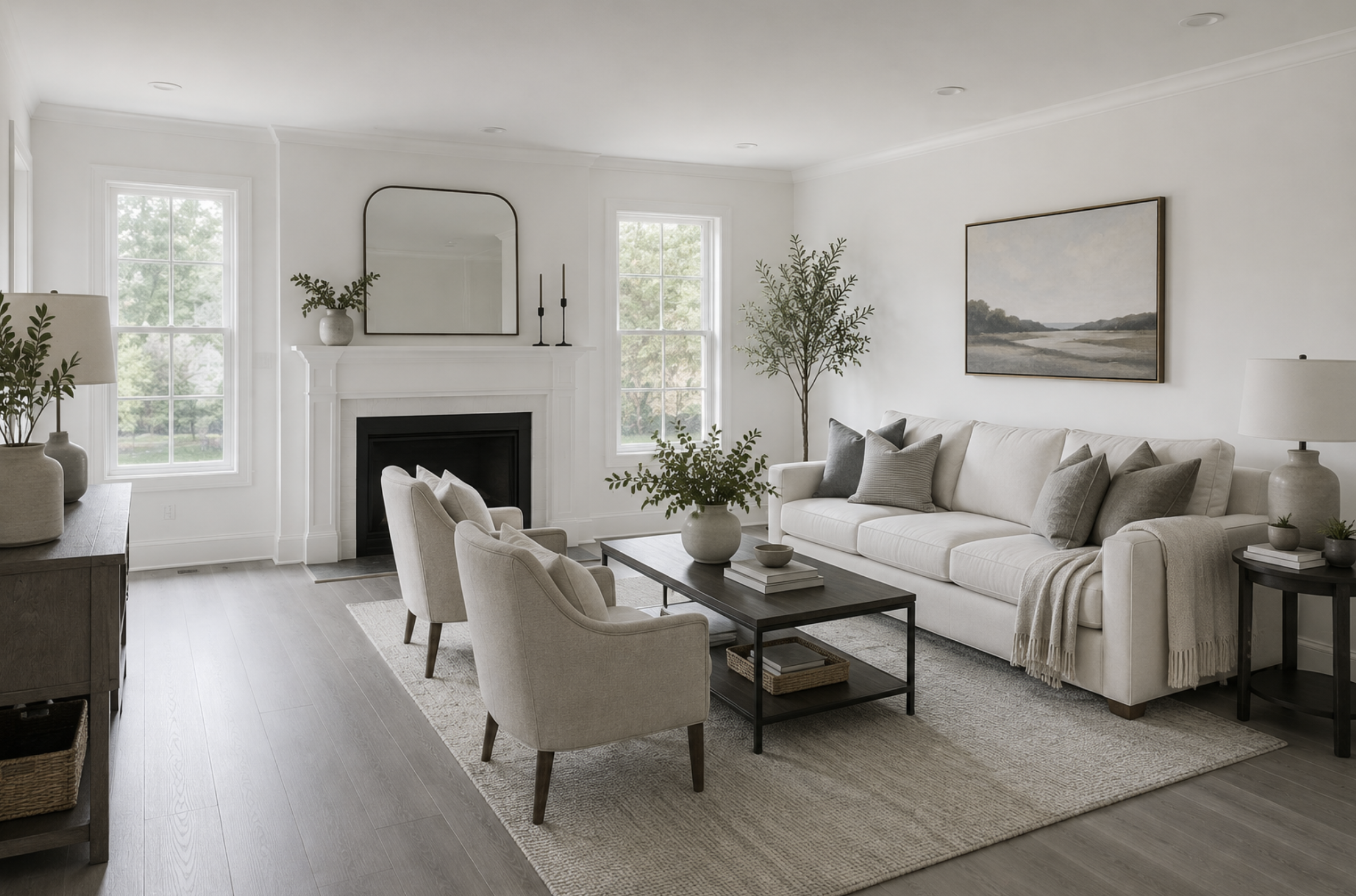
I’d move toward cleaner neutral-to-cool whites rather than creamy whites.
Examples: Benjamin Moore Chantilly Lace (OC-65), Benjamin Moore Decorator's White (OC-149), Sherwin-Williams Pure White (SW 7005), Sherwin-Williams Snowbound (SW 7004), and Sherwin-Williams Extra White (SW 7006).
Here, I'd be particularly careful with a very creamy white because putting yellow warmth directly against a blue/cool gray floor can emphasize both undertones in an unattractive way.
Your Countertops and Cabinets Matter, Too
The same principle applies to countertops, cabinets, tile, backsplashes, fireplaces, and other finishes that are staying with the house. This becomes especially important in homes with older granite.
Maybe the kitchen has granite with brown, gold, and cream running through it. Painting the walls the trendiest white of the moment isn't going to magically turn that kitchen into a new build. And if that white has completely different undertones from the existing finishes, we may actually make the kitchen look more dated.
I'd rather choose a wall color that works with what's already there. We're not trying to force the house into a completely different design style with a gallon of paint. We're trying to make the existing house look as good as it possibly can.
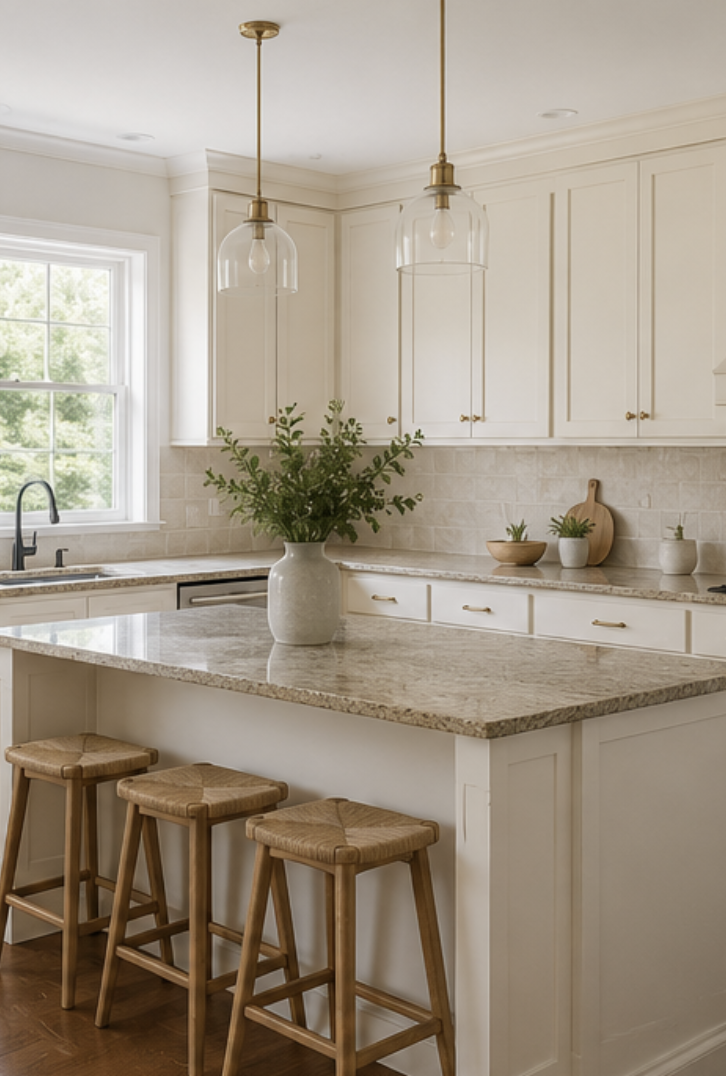
This kitchen has warm tones in the granite, the cabinetry and the floors. I’d choose a wall color that works with those existing finishes rather than trying to force a trendy white that fights against the warm elements.
Then There's Atlanta Light
This is something I pay a lot of attention to when looking at homes here in Atlanta. We have trees.
A lot of trees.
That beautiful wooded lot that's such a selling point can also dramatically change the amount and color of light coming through the windows. Some homes are shaded by mature trees and naturally feel darker inside. Others get tons of direct sunlight. And all of that greenery outside can affect how a color reads once it's on the wall.
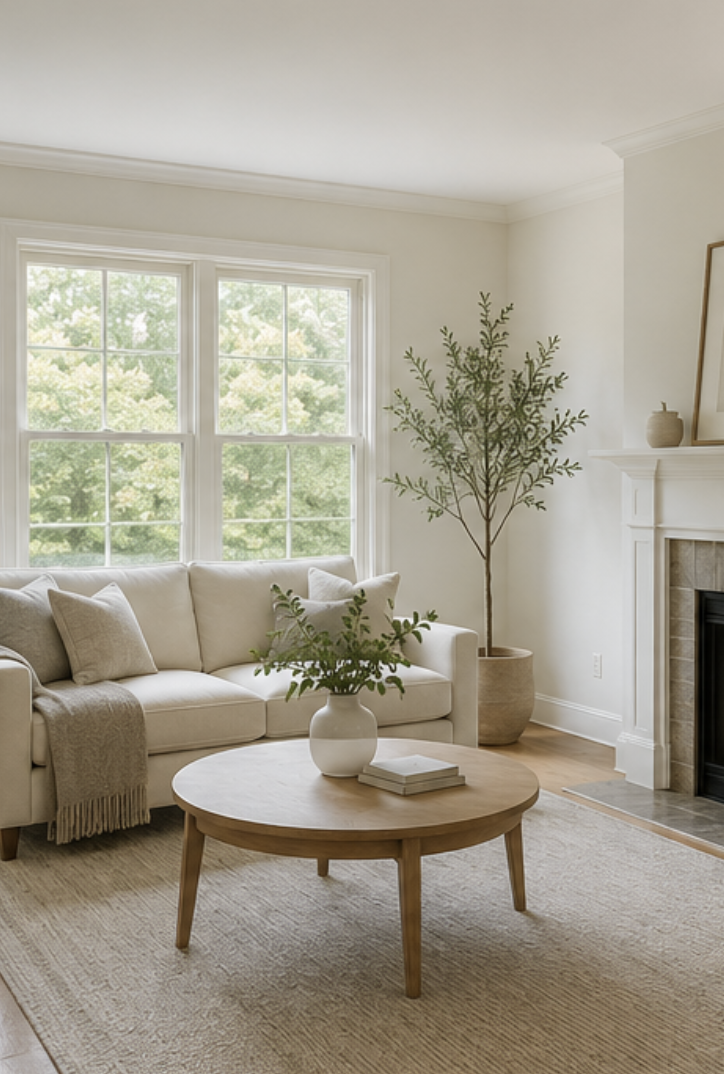
This room gets a lot of natural light, but all the trees outside will reflect green into the space. I want to make sure the white on the walls stays neutral and doesn’t pull green once the sunlight changes throughout the day.
I also want to know where the natural light is coming from. Is the room getting northern light? Southern light? Morning eastern light? Strong western light later in the day?
The exact same can of paint can look different depending on where you put it in the house. That's why choosing paint from a photo online can be so misleading. You're looking at that paint color in someone else's house, with someone else's floors, someone else's windows, and someone else's natural light. It tells me very little about what it's going to do in yours.
Undertones Are Where Things Go Wrong
This is probably the biggest reason I'm hesitant to give someone a paint color without seeing the house. People tend to look at whites and neutrals as if they're simply...white.
They're not. Put several white paint samples next to each other and suddenly you'll see it. One looks yellow. Another looks gray. Another has a green cast. Another looks almost blue. Those undertones become even more noticeable once you put the color next to the permanent finishes in a house.
A white with the wrong undertone can make warm hardwood floors look more orange. It can make countertops look dingier. It can make gray tile look bluer. Meanwhile, the right neutral can help all of those existing elements work together.
That's what I'm looking for. I'm not necessarily choosing my favorite white. I'm choosing the white that makes the house look its best.
What About Accent Walls?
If we're preparing the house to sell, I'd usually paint over them. Accent walls had their moment, but today they can easily make a room feel dated or unfinished. Again, my goal is cohesion.
I want buyers' eyes moving through the house rather than stopping at every change in wall color.The same thinking is why I'm a big fan of carrying the same paint color onto trim rather than introducing another competing white. Keeping the palette simple can make everything feel bigger and more cohesive.
There may still be differences in paint sheen depending on the surface, but visually, I want everything working together.
Don't Pick the Color From a Tiny Paint Chip
Even after I've narrowed down the whites that should theoretically work with the house, I still want to see them in the house. Not just on a two-inch paint chip. Not on Pinterest. Not because someone on Instagram said it's the perfect white. In the actual house. Next to the actual floors. With the actual natural light. Because that's ultimately what matters.
You could show me 100 beautiful photos of a particular white, but until I see what it does next to your flooring, cabinets, countertops, and natural light, I don't know if it's the right white for your house.
So, What's the Best White Paint for Selling a House?
There isn't one. And I'd be skeptical of anyone who tells you otherwise.
The best white for a listing is the one that works with the home's existing finishes, responds well to its natural light, makes the rooms feel brighter and more cohesive, and allows buyers to notice the house instead of the paint. So if your seller finally agreed to repaint before listing, don't waste that investment by automatically choosing whatever white happens to be trending.
Take five minutes and look at the house first. The floors will tell you a lot. The countertops will tell you more. And Atlanta's natural light might completely change your answer.
That's how I'd choose the color.